
While Dubai’s property market continues attracting global attention, 2026 reveals new real estate opportunities across the Gulf Cooperation Council. Vision 2030 projects, economic diversification, and changing residency laws have transformed regional property landscapes. This analysis identifies where smart investments are moving as traditional markets mature.
Saudi Arabia: The $500 Billion Transformation
NEOM represents only part of Saudi Arabia’s real estate revolution. With foreign ownership laws liberalized in 2025 and residency visas tied to property investment, the Kingdom has become the Gulf’s fastest-growing property market.
Riyadh’s Diplomatic Quarter Expansion
The new King Salman Park development—three times Central Park’s size—has spurred surrounding property values increasing 22% annually since 2024. Luxury apartments in the adjacent Diriyah Gate development start at SAR 4 million ($1.07 million), with projected 15% annual appreciation through 2030.
Investment Insight: Off-plan purchases in Diriyah’s later phases offer 70/30 payment plans with completion expected 2027-2028. Early buyers have already seen 40% paper gains on initial phases.
Jeddah’s Coastal Renaissance
The Jeddah Central Project (formerly New Jeddah Downtown) aims to triple waterfront property along the Red Sea. Opera House District residences launched in early 2026 with 80% sold within weeks. Average prices: SAR 12,000 ($3,200) per square meter.
“Jeddah represents pre-Dubai Marina opportunity,” notes property analyst Rashed Al-Mansoori. “Infrastructure completion in 2028 will likely double current values for early investors.”
UAE: Beyond Dubai’s Established Markets
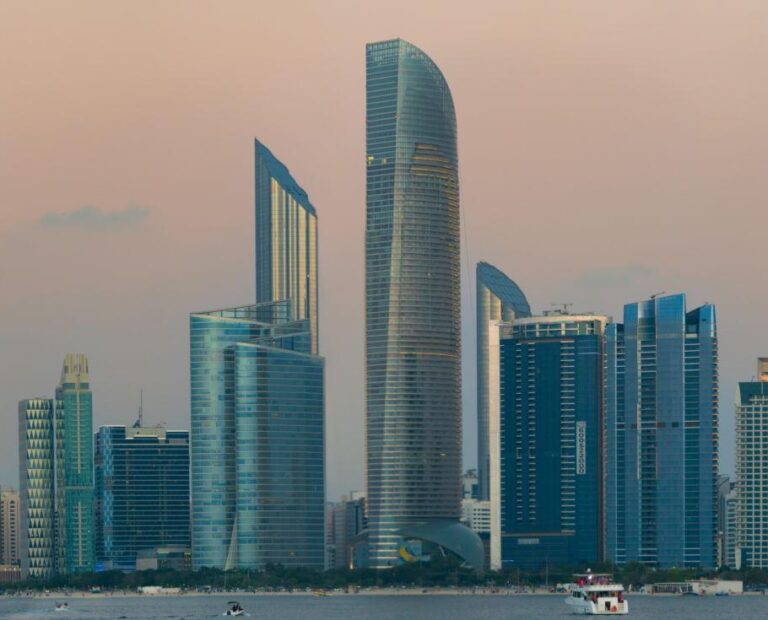
Abu Dhabi’s Cultural District
While Dubai dominates headlines, Abu Dhabi’s Saadiyat Island offers luxury villas with higher yields (5.2% average) than Dubai’s Palm Jumeirah (3.8%). The upcoming Guggenheim Abu Dhabi and Natural History Museum completion in 2027 drives sustained demand.
2026 Update: Non-Muslim freehold ownership expanded to entire Saadiyat Island, with visa eligibility for properties valued AED 2 million+ ($545,000+).
Ras Al Khaimah’s Northern Emergence
RAK’s Al Marjan Island has become the Gulf’s fastest-appreciating market with 28% year-on-year growth. The Wynn Resort opening in 2027 anchors this expansion, with studio apartments currently available from AED 650,000 ($177,000).
Developer incentives include: 5-year payment plans, guaranteed rental yields of 8% for two years, and residency visas regardless of property value.
Qatar: Post-World Cup Recalibration
Doha’s property market experienced correction after FIFA 2022, creating 2026 buying opportunities. Lusail City—built for the World Cup—now offers completed apartments at 25% below 2022 peaks while maintaining premium infrastructure.
Smart Investment: Lusail’s Entertainment District apartments average QAR 14,000 ($3,845) per square meter with projected 7% annual growth as commercial tenants occupy office towers through 2027.
The Pearl-Qatar remains the only freehold destination for non-GCC nationals, with marina apartments offering 5.5% rental yields—highest among Gulf luxury waterfront properties.
Oman: Sustainable Tourism Driving Coastal Demand
Muscat’s Al Mouj development continues expanding with completion of fourth phase in 2026. Unlike other Gulf markets, Oman restricts foreign ownership to integrated tourism complexes, creating controlled supply with consistent demand.
Yields & Returns: Al Mouj villas average 4.8% rental yields with 6-8% annual capital appreciation. Limited availability (only 20% of units sold to foreigners annually) maintains price stability.
Salalah’s mountain-view properties have emerged as climate-resilient investments, with khareef (monsoon) season driving six-month premium rentals. New developments in Ittin require OMR 150,000 ($390,000) minimum investment for residency eligibility.
Bahrain: The Financial Harbor Expansion
Bahrain Bay’s final phase delivers in late 2026, adding 800 waterfront residences. As the Gulf’s most affordable luxury market, Bahrain offers entry prices 40% below equivalent Dubai properties.
Unique Offering: Freehold ownership with permanent residency for properties valued BHD 200,000+ ($530,000+), including access to Bahrain’s public healthcare and education systems.
The Diyar Al Muharraq development features man-made islands with properties starting at BHD 75,000 ($199,000), targeting middle-income investors excluded from other Gulf markets.
Emerging Trends Shaping Gulf Real Estate
1. Sustainability-Linked Financing
New GCC regulations in 2026 offer mortgage rate discounts (up to 0.75%) for properties with Green Building Certifications. Dubai’s Al Barari and Abu Dhabi’s Masdar City developments command 15-20% premiums over conventional properties.
2. Fractional Ownership Platforms
Digital platforms like GulfProp and Manzil now offer shares in luxury properties from AED 50,000 ($13,600), democratizing access to previously exclusive markets. These Sharia-compliant structures include automatic rental distribution and secondary market trading.
3. Hospitality-Residential Hybrids
Branded residences (Ritz-Carlton, Four Seasons, St. Regis) now guarantee 45-60 days personal use annually with professional rental management remaining days. Average net yields: 4.2% after all costs.
4. Proptech Integration
Blockchain-based transactions reduce completion times from 90 to 14 days. AI valuation models using real-time data provide accurate pricing, reducing bid-ask spreads by 30% since 2024.
Investment Strategies for 2026
Short-Term (1-3 years):
Focus on Saudi Arabia’s giga-project early phases (NEOM’s Sindalah Island, Qiddiya entertainment city). Payment plans stretching beyond completion allow leveraging with minimal capital.
Medium-Term (3-7 years):
UAE established markets (Dubai Hills, Abu Dhabi Reem Island) offer stable 4-6% yields with moderate appreciation as infrastructure matures.
Long-Term (7+ years):
Oman integrated tourism complexes and Bahrain’s residential offerings provide stable markets with residency benefits, ideal for retirement planning.
Risk Considerations
Regional Specifics:
- Saudi Arabia: Under-construction risk remains high; ensure escrow protections
- UAE: Oversupply concerns in certain segments (Dubai apartments); focus on differentiated offerings
- Qatar: Liquidity constraints in secondary market
- Oman: Limited exit options due to foreign ownership restrictions
- Bahrain: Slower appreciation potential but higher yields
Universal 2026 Factors:
- Interest rate fluctuations affecting mortgage availability
- Oil price volatility impacting regional economies
- Geopolitical tensions potentially affecting market sentiment
- Climate change considerations for coastal properties
Legal Framework Updates
2026 Regulatory Changes:
- GCC-wide property registration system implementation
- Anti-money laundering requirements increasing due diligence timelines
- Escrow protection mandatory for all off-plan purchases
- Dispute resolution centers established in each GCC nation
Tax Implications:
- No property taxes across GCC (confirmed through 2030)
- Capital gains taxes remain absent in UAE, Qatar, Oman
- Saudi Arabia considering 5% gains tax on properties sold within 2 years of purchase
- Inheritance laws vary significantly—Sharia application for Muslim investors, varied for non-Muslims
Financing Options in 2026
Local Banks:
- Emirates NBD: Up to 75% financing for expats, 80% for UAE nationals
- Saudi British Bank: NEOM-specific mortgage products with 5-year fixed rates
- Qatar National Bank: 70% financing on Lusail properties
International Institutions:
- HSBC Gulf: Cross-border financing using home country assets as collateral
- Standard Chartered: Islamic mortgage options across GCC markets
Developer Financing:
- Direct payment plans (typically 70/30 over construction period)
- Post-completion payment deferrals (6-24 months interest-free)
- Rent-to-own schemes emerging in competitive markets
The 2026 Outlook
Gulf real estate continues transitioning from speculative investment to income-generating asset class. While Dubai maintains its regional dominance, Saudi Arabia’s unprecedented scale, Abu Dhabi’s cultural offerings, Oman’s controlled markets, Bahrain’s affordability, and Qatar’s post-correction opportunities create diversified portfolio possibilities unavailable in previous cycles.
As GCC nations increasingly compete for foreign capital and talent, real estate remains central to economic visions—making 2026 a pivotal year for strategic positioning in markets offering both growth potential and tangible asset security.
For comprehensive Gulf real estate analysis and investment opportunities, explore our Business category for regular market updates and emerging opportunity alerts.